
Just over 105 years ago, on April 14, 1921, the chairman of the Cheka, Felix Edmundovich Dzerzhinsky, was appointed the people's commissar of communications of the RSFSR. This association immediately came to your author's mind in connection with the appointment of the former, nearly 10-year, head of the Ministry of Internal Affairs, Rihards Kozlovskis, as the Minister of Transport of Latvia.
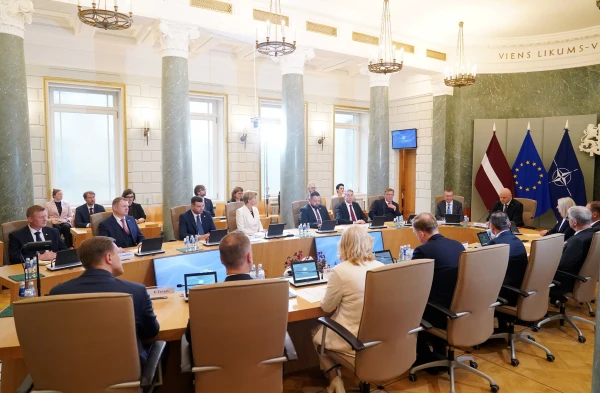
The task he received is truly "execution-worthy" – if not to complete, then to accelerate the construction of Rail Baltica. And the situation at the site – or rather, their aggregate – looks poor. In any case, judging by the summary document that conveniently arrived just in time for the Cabinet of Ministers of Andris Kulbergs...
In legislative order
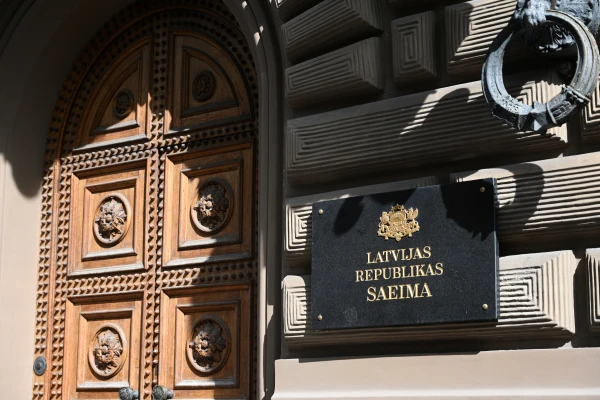
But first of all, it is worth noting that on May 21, 2026, the Saeima adopted amendments to the Law on the Implementation of the Rail Baltica Project. The new regulatory act:
-
Establishes the sequential implementation of the project;
-
Expands the circle of structures involved in the implementation of the project and clarifies the distribution of responsibilities;
-
Establishes the procedure for extending construction permit deadlines, handling natural resources, and drainage systems;
-
Strengthens the principles of information openness regarding project documentation.
The functions of design, supervision of it, and conducting expertise have been transferred from the international joint venture RB Rail AS to the national LLC Eiropas Dzelzceļa līnijas (hereinafter EDzL). Along with them, 10.9 million euros in funding and 13 staff positions were "relocated." At the same time, the Cabinet of Ministers (still E.Silins) allocated 17.4 million euros for the payment of delayed payments.
Tension on the route
An important aspect remains the provision of the high-speed railway of European gauge with what it needs – electricity. In this context, a year ago, on June 17, 2025, a message was issued by the Cabinet of Ministers "On the tender procedures for negotiations on the design and construction of the energy subsystem of Rail Baltica." The responsible institution for the connection was the aforementioned EDzL.
As for financing, the EU allocated it, but it is, according to experts from the Ministry of Transport, "structurally fragmented," "allocated by separate construction permits and activities." In any case, "the total available funding allows for the commencement and continuation of construction of the main route, however, it does not provide full coverage of the project and insufficient financial resources have been noted in certain cost items."
Therefore, the new leadership of the Ministry of Transport will require "allocation of financial resources." That is, redistribution of cash flows. At a practical level, this means "technical optimization of the project" and "adaptive solutions"...
A bridge that became four times more expensive
The main stumbling block was the railway-road bridge over the Daugava. Last year, it was noted that the initial estimates for construction – 199 million euros – could ultimately rise to 800 million. And – "a decision was made to revise the technical and financial solutions of the project."
They started, of course, with reducing administrative costs and personnel payments. The Ministry of Transport, for its part, "facilitated a change in the corporate mindset of EDzL and a transition to a results-based approach..." At the same time, in 2025, the Cabinet of Ministers transferred 114.6 million euros from the EU Recovery Fund to complete construction in the southern part of the Riga Central Station; a modified contract was signed with the builders Bererix, "to fit within the available funding and deadlines."
In turn, 133 million euros were allocated from the EU cohesion fund to ensure the connection between Riga Airport and the Central Station. 45 million euros intended for an overpass towards Marupe were redirected to Imanta.
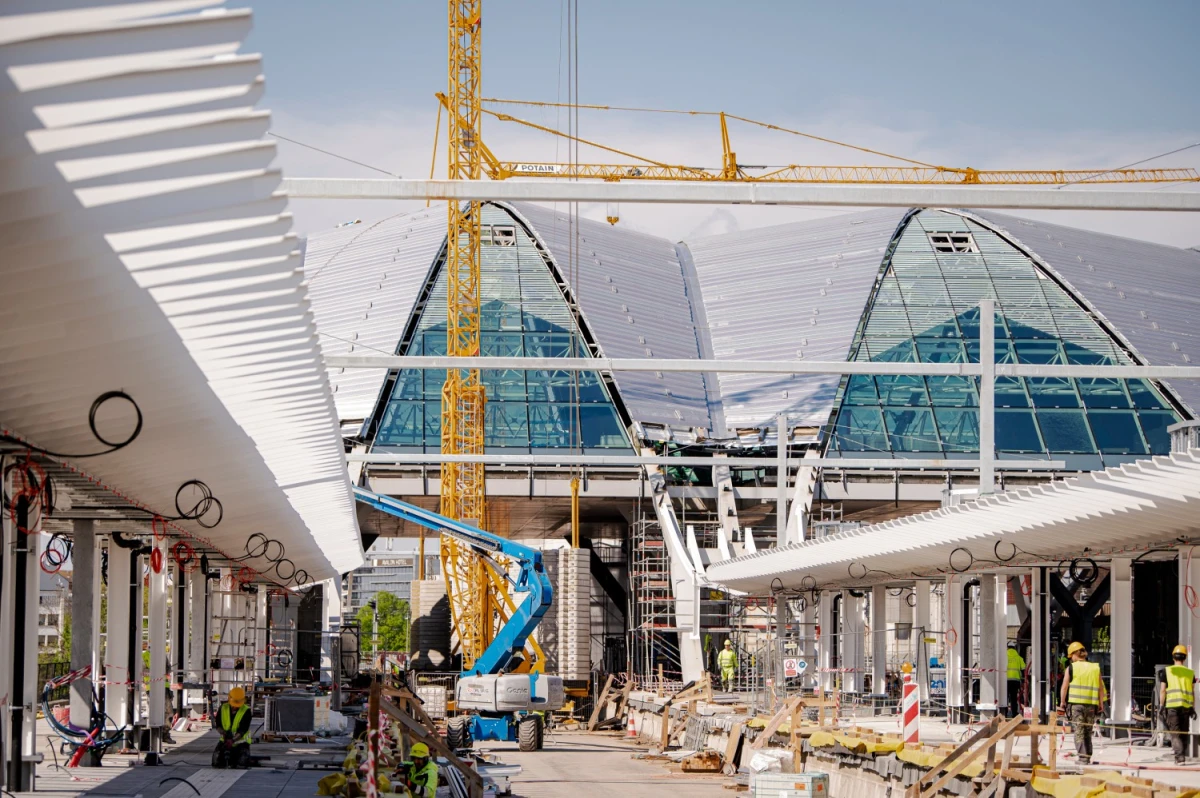
Currently, about 700 million euros are available for railway construction in Latvia, of which 603 million are directly for laying the track, and the rest for construction supervision and project management. "With this amount, it is currently possible to build an embankment of the main route 52.66 kilometers long," the Ministry of Transport admits. "Based on this data, the creation of the embankment of the main route costs approximately 11.4 million euros/km (excluding rails, trains, signaling, and stations)."
At the request of the Ministry of Transport, a price range for the rails themselves was also determined – it turned out to be 5.9 million euros/km, again, excluding electrification and system support.
What will be built this year
Of course, the above figures surprised the representatives of the authorities somewhat. After negotiations between the ministries of the three Baltic states, a "comprehensive review of the functionality and financing model of the joint venture RB Rail" was conducted. From Brussels, the curator of the TEN-T North Sea-Baltic transit corridor, Katerina Trautmann, is closely monitoring the process. As a result, the parties "facilitated a better understanding of the progress and challenges in Latvia," and for 2026 we expect the following:
-
125-170 million euros are planned for construction works on the main route;
-
8 million euros in funding has been allocated for the adaptation of the project of the southern section of the main route Lithuania border-Misa (section DS4);
-
120 million euros are planned for the completion of essential works in the southern part of the Riga Central Station building (RCS) by the end of August;
-
52 million euros have been allocated for the continuation of the construction of the Rail Baltica station and accompanying infrastructure at Riga Airport.
Give a billion!
Currently, the deadline for the procurement of the control, management, and signaling subsystem for Rail Baltica is approaching. Former Minister Aitis Shvinka held weekly meetings for this...
In the fall, the European Commission agency – CINEA – is expected to approve the applications from the Ministry of Transport, RB Rail, and EdZL for the remaining funding. "This is a EU transport infrastructure program designed for... strategic cross-border projects," the document from the Ministry of Transport emphasizes.
So Rail Baltica may receive more than 1 billion euros in the near future!
Well, the new minister, Mr. Kozlovskis, apparently has to bring strong management to this long-awaited project. Historical analogies inevitably evoke the "dead road" Salekhard-Igarka...







Leave a comment