
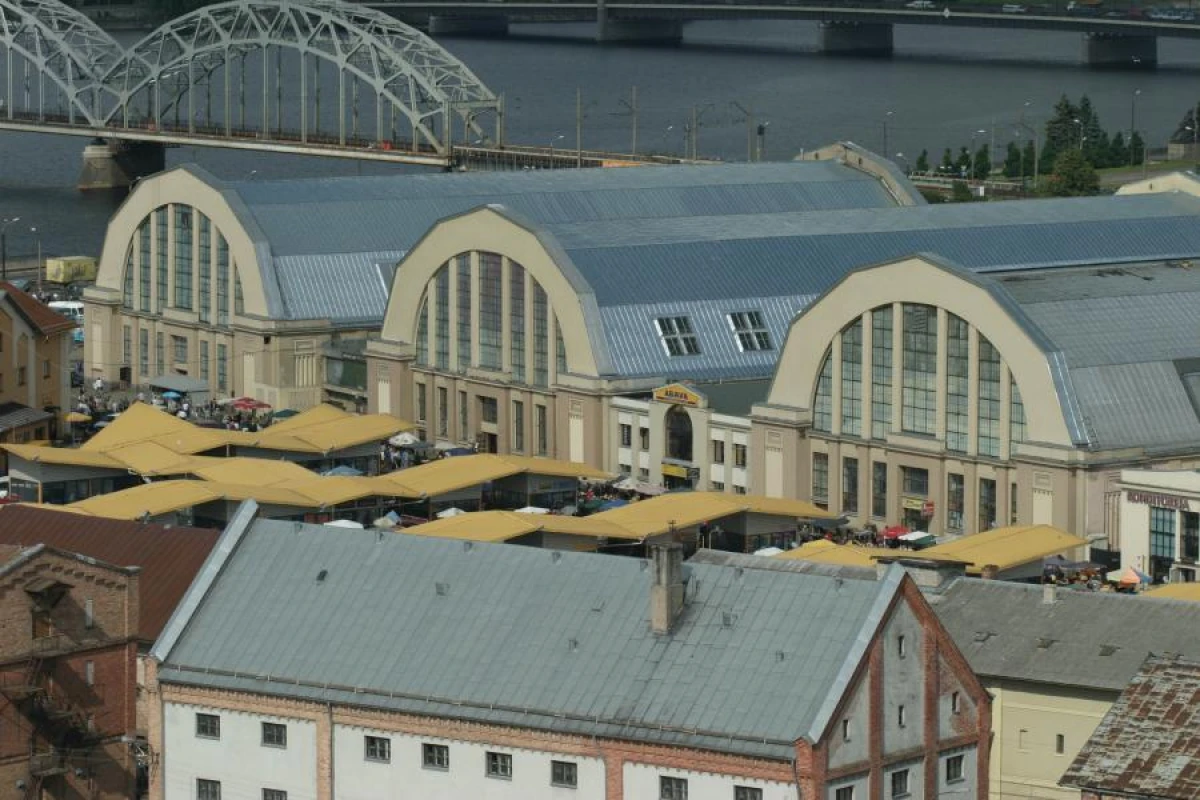
Bens Latkovskis in Neatkarīgā leaves no stone unturned regarding the Central Market of Riga.
What was the market like during the USSR? Back when anything even remotely valuable and of good quality was a deficit in grocery stores, you could buy almost everything at the market. However, at significantly inflated prices. Market prices.
At the market, goods came directly from the producer. Straight from the field or the barn. A collective farmer, having slaughtered his fattened pig from his household, could take it to the market and sell it. Or, having gathered apples and plums from his garden, he would bring them in hopes of earning a couple of dozen rubles that would be useful for his household. Buyers knew that the goods were genuine, came from the field, and differed from store products primarily in that good apples or pears were sold separately from damaged ones, unlike in stores where you take what you are given.
After the change of the socio-political system in the early nineties, everything changed drastically. The market suddenly turned into a cheap place for buying and selling products of dubious quality and origin, where all those who were struggling to find "normal" work gathered...
Just like in other "third world" countries, the market square became a cheap surrogate for a store, where you could buy the same things as in the store, only cheaper, since the trade was conducted in the shadow or semi-shadow sector of the economy.
No taxes were paid, or they were paid at the minimum possible. This situation was not characteristic only of the Riga Central Market. It was typical for all markets and their surrounding areas.
Partly, this has persisted to this day. The State Revenue Service and other structures turn a blind eye to this, as this trade serves a certain function of social cushioning.








Leave a comment