
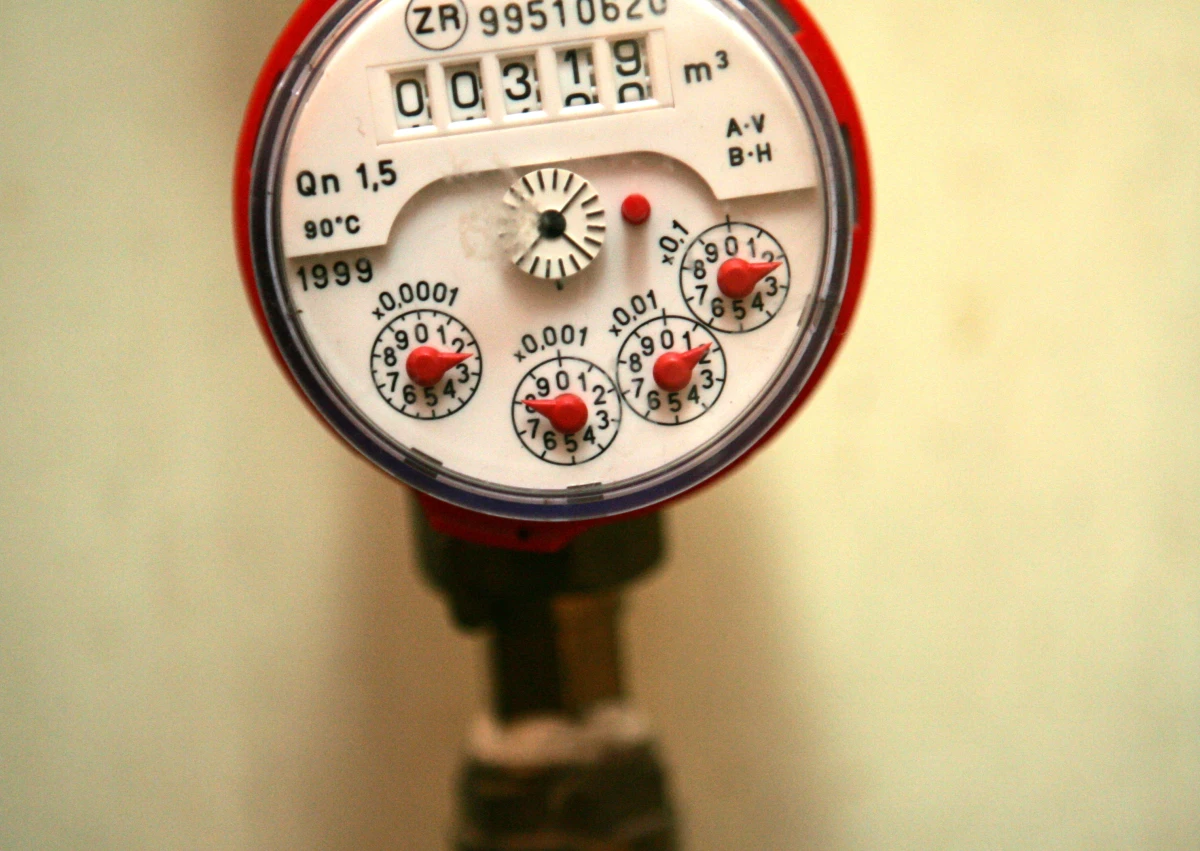
The Constitutional Court of Latvia recognized the norm that allowed the imposition of the obligation to pay the entire difference in water consumption in a building on individual apartment owners as inconsistent with the Satversme. The court concluded that such a procedure could be unfair and disproportionate.
The Constitutional Court has made an important decision for apartment owners in multi-apartment buildings, declaring unconstitutional the norm regulating the distribution of the so-called difference in water consumption.
This concerns cases where the total water consumption in a building exceeds the total readings of the apartment meters. The previously applicable procedure stipulated that the entire difference could be imposed on the owners of apartments where the meters had not undergone timely calibration, were damaged, or had violations of sealing.
The court agreed that residents are obliged to pay for the water they actually consumed and should not benefit from unverified meters. However, the problem is that the difference in water consumption arises not only for this reason.
As noted by the Constitutional Court, various factors can influence the readings, including accidents, leaks, repair work, the technical condition of the building's internal networks, and other circumstances beyond the control of the specific apartment owner. Therefore, placing the entire financial responsibility solely on one or several owners does not align with the principles of fairness and proportionality.
For many residents of multi-apartment buildings, this decision has practical significance. In recent years, disputes over the so-called 'water difference' have regularly led to conflicts between residents, management companies, and service providers.
The court also pointed out that apartment owners often could not calculate the amount of charges in advance. In some cases, the amount of the 'water difference' significantly increased utility bills.
At the same time, the Constitutional Court did not recognize the norm as invalid retroactively for all previously considered cases. The judges indicated that this could affect legal certainty and the interests of other participants in already concluded processes.
However, for individuals whose cases are still under consideration by the courts, as well as for the participants in the two cases that served as the basis for the appeal to the Constitutional Court, the disputed norm has been declared invalid from the moment their fundamental rights were violated.
The basis for the proceedings were two civil cases being examined by the Riga City Court. They challenged claims for the recovery of debts, including charges for the difference in water consumption.
The decision of the Constitutional Court is final, not subject to appeal, and will come into force after publication in the official publication 'Latvijas Vēstnesis'.
Thus, the court has called into question the long-standing practice of distributing the 'water difference' and has effectively indicated the need for a fairer calculation mechanism for residents of multi-apartment buildings.









Leave a comment