
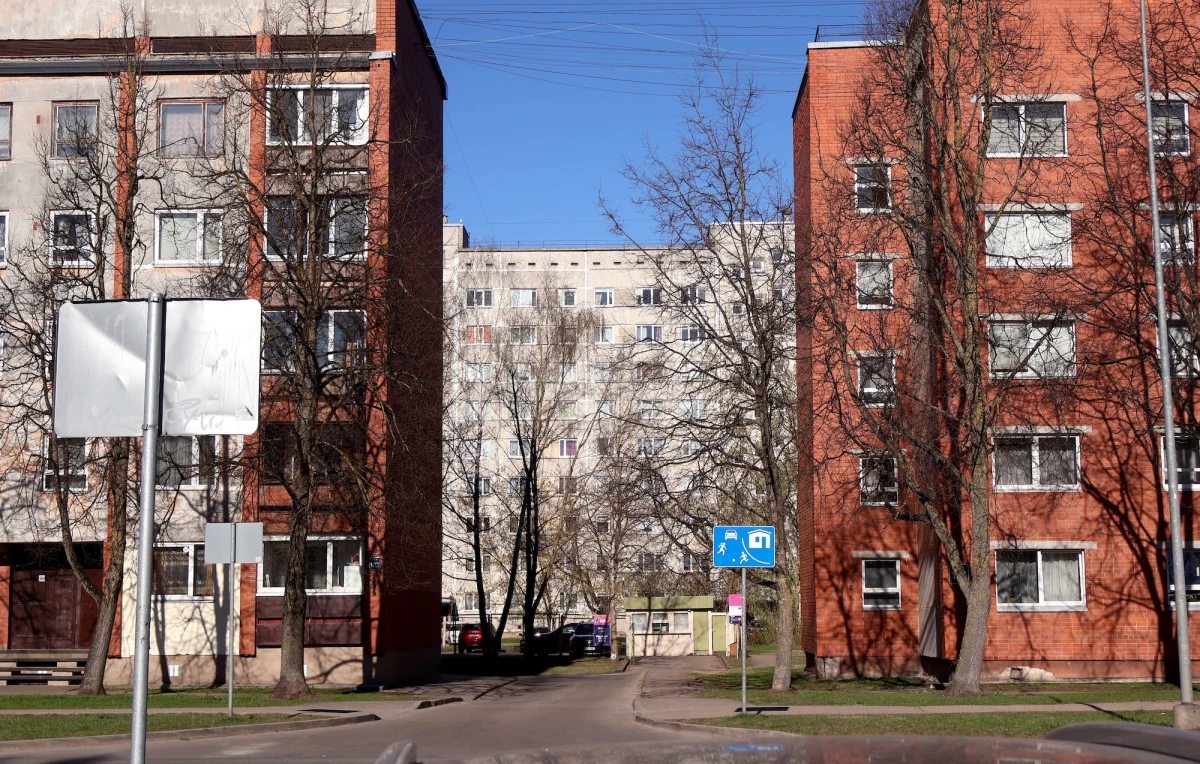
Most apartment buildings in Latvia are approaching an age where they require not just cosmetic repairs but large-scale renovation. According to experts, more than 21 billion euros will be needed to extend the lifespan of such buildings.
Latvia is facing a growing problem of aging housing stock. To ensure that around 26,000 apartment buildings remain habitable for at least another two decades, large-scale work costing 21.6 billion euros is needed, writes Dienas Bizness.
Although apartment buildings make up only 16% of all buildings in the country, they account for more than 60% of the residential space. The problem is particularly acute in Riga, where most of the large Soviet-era apartment buildings are located.
Until now, the main focus has been on insulating buildings and improving energy efficiency. However, experts increasingly say that this is no longer sufficient.
According to Karlis Grinbergs, director of the Riga Energy Agency, the main problem today lies in the overall technical condition of the buildings. Many structures require comprehensive capital repairs that should include both structural work and measures to reduce energy consumption.
In fact, this is not just about lower heating bills. If repairs are delayed for too long, some buildings may gradually become uninhabitable.
Currently, only about 4% of Soviet-era apartment buildings have been renovated using European funding. The rest still belong to low energy efficiency classes and require significant investment.
The problem also touches on so-called energy poverty. Many families are forced to spend a significant portion of their income on heating and utilities while continuing to live in cold and uncomfortable apartments.
An additional complication is that most apartment buildings were constructed between the late 1950s and the early 1990s. This means that the need for capital repairs for thousands of buildings is approaching almost simultaneously.
The main obstacle remains financing. As noted by Martins Auders, director of the Housing Policy Department of the Ministry of Economics, it is no longer possible to rely solely on European funds. According to him, the country will need a new financing system that allows residents to obtain long-term loans for home repairs at affordable interest rates.
In the coming years, the issue of modernizing the housing stock may become one of Latvia's largest infrastructure challenges. The ability to find funding sources will determine not only the energy efficiency of buildings but also the preservation of a significant portion of the existing housing.










Leave a comment