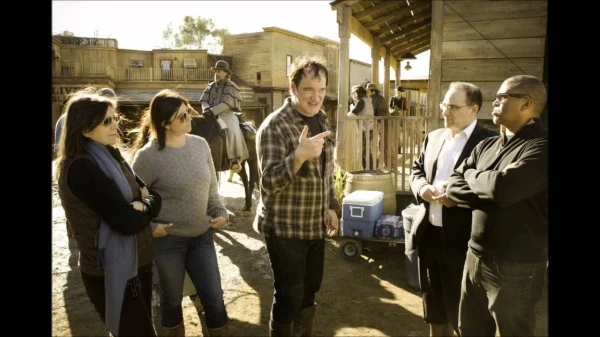
Filming with Quentin Tarantino is not just working on a film, but a complete immersion into his unique world. The director demands full dedication, concentration, and readiness for unexpected twists from the actors. Sometimes it’s a risk, sometimes it’s a departure from familiar comfort, but always it’s an opportunity to become part of a story that will be dissected frame by frame for many years.
Quentin Tarantino is often referred to as a great director, a classic, and an icon of style. But his films still live with excitement, sharp as the dialogues, editing cuts, and unexpected plot twists. Working with him is a challenge: actors face his strict rules, habits, and principles, which can sometimes be inspiring, sometimes irritating, and sometimes even frightening.
Main Rules and Features of Working with Tarantino:
-
No Mobile Phones
A complete ban on phones on set helps maintain the emotional state of the scene and the concentration of the actors. Any call can break the tension that the team has worked on for several takes. -
Stunts and Risk
Some scenes require actors to perform stunts themselves. The incident with Uma Thurman’s accident while filming "Kill Bill" showed that Tarantino trusts the intuition and professionalism of the actors but takes responsibility for the consequences. -
Tarantino the Actor
The director regularly appears in his own films in small roles or cameos. This is not a desire to overshadow the professionals but a way to enhance control and emphasize his presence within the created universe. -
Love for Feet
Filming feet and shoes is part of Tarantino's visual eccentricity. For an unprepared actor, this may seem strange, but within his authorial world, such details are important for the rhythm of the scene. -
Energy on Set
Tarantino brings excitement and celebration to the set, which literally energizes the actors. Even when strictly following the script, he imposes live emotional work, pushing performers towards bold decisions. -
Roles Against Expectations
He often breaks the typecasting of actors: John Travolta in "Pulp Fiction" or Leonardo DiCaprio in "Django Unchained" are examples of roles that turned careers upside down and challenged the audience's usual expectations. -
Profanity
Tarantino's coarse language becomes a musical structure of dialogue. Every curse word serves the character, tension, or humor of the scene, and actors must maintain the exact tempo and rhythm. -
Genre Surprises
Tarantino's films often disguise themselves as familiar genres only to deconstruct them from within. Actors must be prepared for a scene to suddenly shift tone—from farce to tragedy. -
Recurrent Collaborations
If an actor impresses Tarantino, they will be invited back. Samuel L. Jackson, Uma Thurman, Brad Pitt—these are the regular troupe, trusted performers that the director can rely on. -
Scenes with Sharp Mood Swings
Tarantino masterfully manages emotional jumps within a single scene—from light humor to violence. Actors must be ready for instant emotional switches and maintain concentration. -
Violence as a Dramatic Tool
In Tarantino's films, violence is not decoration but part of the narrative. Even peaceful characters can become participants in bloody events. Actors must be able to express this accurately, convincingly, and emotionally.
Working with Quentin Tarantino is a test, a chance to go beyond the ordinary and become part of a unique cinematic universe that will remain in history.