
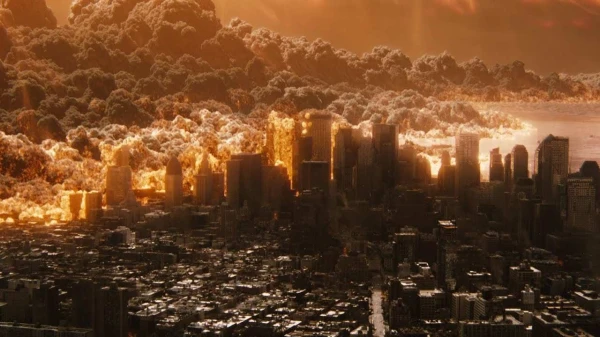
In 1960, American scientists attempted to mathematically determine the date of "Doomsday" and concluded that a global catastrophe could occur on November 13, 2026, due to overpopulation. However, reality showed that their prediction was too pessimistic.
The Mathematics of the End of the World
Researchers Heinz von Foerster, Patricia M. Mora, and Lawrence W. Amiot analyzed demographic data over the last two thousand years and noted an almost explosive growth in the planet's population. Even wars, famine, and pandemics did not change the overall trend. Based on this data, they created a mathematical model that showed that with unchanged growth, the population would reach "infinity" on Friday, November 13, 2026 — a conditional date for the end of human civilization.
Why the Prediction Did Not Come True
The main flaw of the model was the disregard for social factors. In the second half of the 20th century, birth rates sharply declined in many countries due to:
- women's education;
- widespread access to contraception;
- changes in life priorities.
Today, the Earth's population is about 8.2 billion people, and the growth rate is gradually falling. According to UN forecasts, the peak population will reach approximately 10.3 billion in the 2080s, after which a decline will begin. The exponential "explosion" of the population that scientists feared in the 1960s did not occur.
The Main Conclusion
The "Doomsday Equation" became an example of how even strict mathematical models can be wrong without considering the human factor. Humanity has not come closer to the end of the world — it has simply adapted and changed the rules of the game.
















Leave a comment