
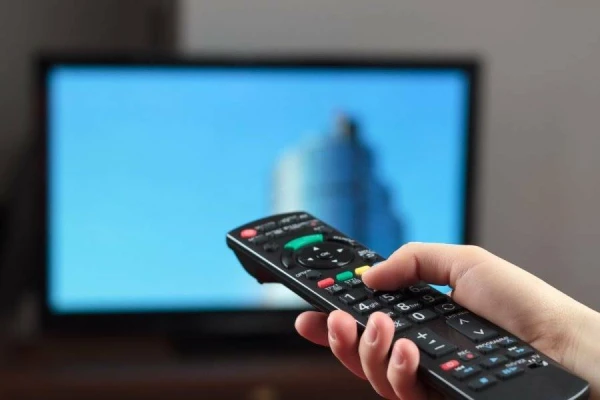
After a long workday, it's easy to fall asleep to the sounds of your favorite series. Some believe that the background noise of the TV is a great sleep aid, while others are convinced that it negatively affects sleep quality. What is the truth?
According to a survey among American consumers, 60% of people fall asleep with the TV on. Another study shows that 31% of respondents in the U.S. consider the TV to be a “great sleep aid.” However, scientists warn that this can be a harmful habit.
Experts have long studied the impact of television on sleep quality. While many find it helps them relax, there are several scientifically supported “side effects” of such pastimes.
A decrease in melatonin levels, which negatively affects sleep quality.
Melatonin is a key hormone that significantly influences our biological clock by regulating sleep and wake cycles. If this process is disrupted, a person may experience discomfort (similar to jet lag) or develop illnesses (with prolonged disruptions).
Melatonin promotes sleep, and darkness stimulates its production, while light reduces the level of this hormone. Since TV screens emit light, they can suppress melatonin production, which in turn affects sleep quality and may lead to insomnia.
Your Subconscious Continues to Perceive Information from the Screen
A person can be in both a conscious and subconscious state. The brain is a remarkable mechanism that continues to function even during sleep, operating in “subconscious mode.” Therefore, when you doze off in front of the screen, your subconscious continues to perceive and process information from your favorite series, preventing your brain from getting a full rest.
Moreover, numerous studies show that what you watch before bed influences your subconscious and dreams. This is why, after watching horror movies at night, you may encounter nightmares.
You Accumulate a “Debt” to Your Body
Some studies indicate that sleep deprivation “borrows” resources from the body. It is believed that even a week of quality sleep cannot compensate for one night of poor sleep. If a lack of sleep accumulates, you will feel chronic fatigue, drowsiness, and suffer from even greater insomnia.
You Risk Gaining Weight
One study established a link between watching television and weight gain, even obesity. The research found that participants who fell asleep with the TV on gained an average of 5 kilograms over 5 years, 17% more often than those who did not. Although scientists could not precisely explain the reasons, it is suggested that the screen light, affecting melatonin levels, disrupts metabolism in the body.
















Leave a comment