
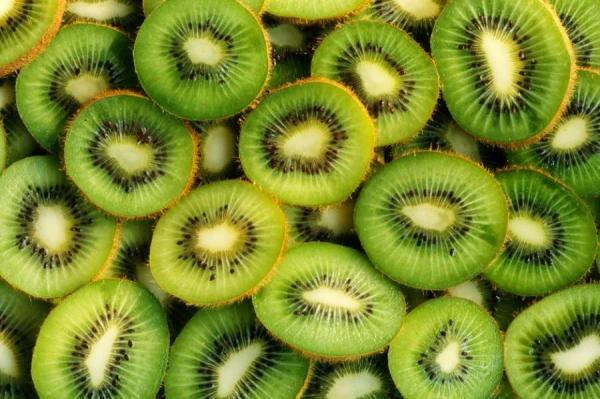
The holiday dedicated to the Chinese fruit, Kiwi Day, is celebrated on December 21 in various countries. The fruits of the woody vine actinidia were known in China as early as the 12th century, but it was only in the 20th century that kiwi gained popularity worldwide.
From a botanical point of view, kiwi is a berry. In the wild, its fruits are quite small. In terms of taste, they resemble gooseberries, which is why until the mid-20th century, kiwi was called the 'Chinese gooseberry.' Later, this fruit made its way to New Zealand, where breeders developed larger and tastier varieties. In 1960, New Zealand breeder Alexander Allison named the fruit 'kiwi' after the bird of the same name, as he believed they were similar: both are small, brown, and fuzzy.
After World War II, kiwi became popular thanks to British and American soldiers stationed at military bases in New Zealand. Officers and enlisted men fell in love with this fruit. By the end of the 20th century, kiwi began to be cultivated and exported to various corners of the world.
Despite its unremarkable appearance, kiwi fruits contain many vitamins and minerals essential for the body. Numerous studies have confirmed their benefits for supporting the immune system and thyroid function. Kiwi is also considered a natural antioxidant that positively affects the gastrointestinal, cardiovascular, endocrine, and urinary systems, as well as improving the condition of skin, hair, and nails.
When choosing kiwi, it is important to pay attention to the skin of the fruit. It is recommended to buy only those fruits that are free of wrinkles, spots, and dents, with an even color and a dry, fuzzy surface.
The fruits should be slightly firm. Too soft ones will be overripe and tasteless, while too hard ones will be underripe. Pay attention to the attachment point of the stem: it should be dry, and when pressed, juice should be released.
Experts advise storing kiwi in the refrigerator but not freezing it. Washing the fruits before storage is not recommended, as this can lead to rotting. In general, at temperatures not exceeding 10°C, the fruits can remain fresh for up to two months.












Leave a comment