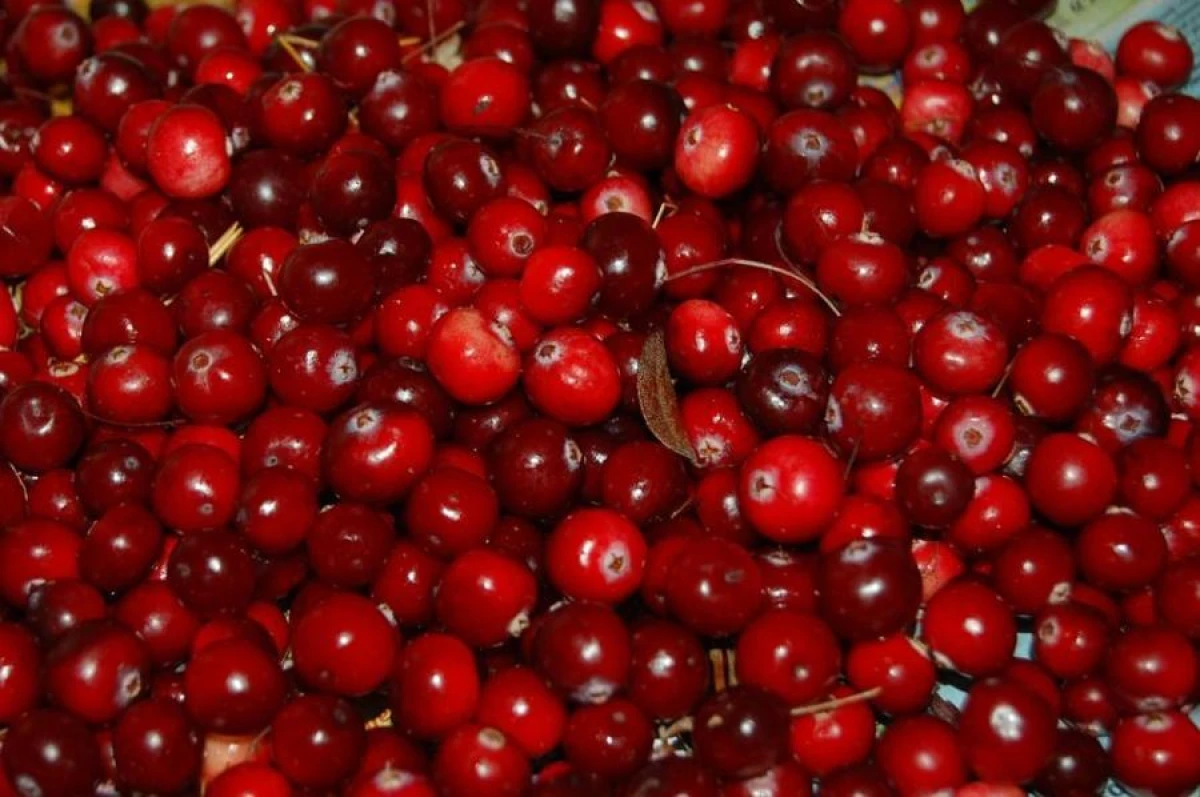
Small red fruits are a true source of beneficial substances.
Due to their characteristic sour-bitter taste, cranberries are rarely eaten fresh. They are most often used to make vitamin juices, smoothies, and fruit drinks, as well as being used as an ingredient in sauces and an addition to meat dishes and pickles.
Cranberry bushes grow in wetlands in the Northern Hemisphere. Spring cranberries are the richest in valuable nutrients, while berries harvested in early autumn contain less sugar but spoil faster. Cranberry juice is often recommended for colds due to its high vitamin C content, which exceeds that of citrus fruits.
Cranberries are 88% water, with the remaining part consisting of fiber and carbohydrates. In their pure form, the berries contain very few calories: 46 calories in 100 grams, 0.4 g of protein, 12.2 g of carbohydrates, and 0.1 g of fat. Cranberries contain beta-carotene, vitamins A, E, and K, as well as B vitamins (B1, B2, B3 (PP), B4, B5, B6, and B9). Additionally, the berries contain calcium, iron, magnesium, phosphorus, potassium, sodium, zinc, copper, manganese, and selenium.
Let's consider the main health benefits of cranberries.
Supports Heart Health
The polyphenols found in the berries may reduce the risk of cardiovascular diseases. Consuming cranberries is beneficial for people with heart conditions, and cranberry supplements may help reduce body mass index and increase levels of “good cholesterol.”
Improves Memory
Regular consumption of cranberries may help improve memory and brain function. Research by scientists from the University of East Anglia has shown that a small portion of berries enhances visual memory and positively affects the nervous system of people aged 50–80 years.
Protects Against Infections
Due to their content of proanthocyanidins, cranberries may reduce the risk of urinary tract infections. These substances prevent the proliferation of E. coli on the mucous membrane of the bladder and urinary tract in both children and adults. However, for treating infections, cranberries alone are not sufficient; medications prescribed by doctors are necessary.
Protects Teeth from Cavities
Proanthocyanidins found in cranberries can protect teeth and gums from pathogenic bacteria. Scientists at the Center for Oral Biology and the Eastman Dental School at the University of Rochester Medical Center in New York have found that these substances prevent bacteria from adhering to the surface of teeth and protect the gums.
Contraindications
Cranberries are considered safe for health when consumed in moderation. However, overeating may lead to unpleasant effects that negatively impact digestion. Additionally, those predisposed to kidney stones should not indulge in cranberries excessively.