The war in Iran has changed the dynamics of the aviation industry — Western airlines are filling the gap created by the reduction of capacity from Middle Eastern carriers due to the conflict. This is reported by Bloomberg.
Bypassing Dubai
The closure of Iraqi and Iranian airspace, as well as attacks on airports in the region, have led to the cancellation of over 46,000 flights there in just the first two weeks of the conflict. Passengers who previously flew with layovers in Dubai or Doha are now seeking alternative routes.
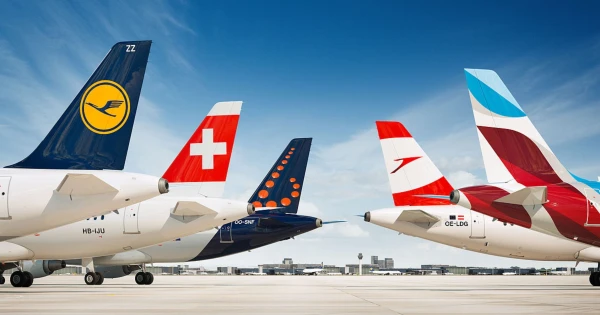
Deutsche Lufthansa AG, British Airways, and Air France-KLM quickly redirected their aircraft to destinations such as India, Thailand, and Singapore last month to attract passengers looking for new flights. Lufthansa has already increased the number of flights to Bangkok, Singapore, New Delhi, and Shanghai.
One question is how long such changes will last. Aviation analyst Rob Walker from consulting firm ICF emphasizes that Middle Eastern carriers "will not give up their ambitions to become global hubs," so European companies should simply "make hay while the sun shines."
Europeans Are Snatching Up Passengers
Senior consultant Richard Evans from the analytics firm Cirium agrees: "I expect that Gulf carriers will offer very attractive fares to restore traffic through their hubs, so European carriers may have only a small opportunity to take advantage of high demand and high fares."
As Bloomberg reports, data from Flightradar24 shows that American carriers United Airlines and Delta Air Lines have increased long-haul operations on wide-body aircraft by 11% and 12%, respectively. They have added flights to existing European destinations and opened new routes aimed at affluent American tourists.
However, the agency notes that this growth largely reflects plans made even before the war began.
Fewer Landings – More Money
Despite the increase in passenger traffic, airlines are facing serious financial difficulties. Fuel prices have soared due to supply chain disruptions, and this increase is putting immense pressure on the industry. This forces airlines to raise ticket prices.
At the same time, American carriers are more susceptible to fluctuations in fuel prices, as they are not hedged.
According to Walker, in the context of the crisis in the Middle East, non-stop flights from the U.S. to Asia, as well as transatlantic routes where American airlines use code-sharing with European carriers, will benefit.
Stocks Are Landing
Financial markets have also reacted to changes in the aviation industry following the outbreak of war in the Middle East. The Bloomberg World Airlines Index has fallen by more than 11% since the start of the war. Lufthansa's shares have dropped by 17% during the conflict, while British IAG (the parent company of British Airways) has lost 13% over the same period.