
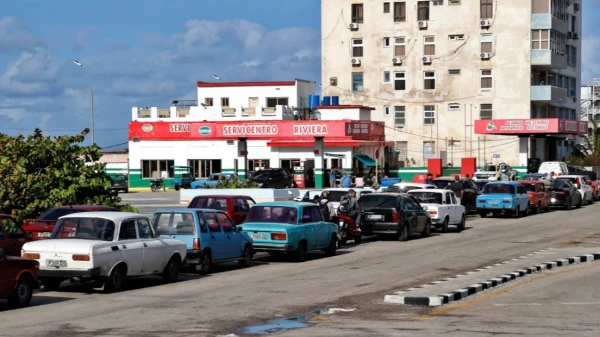
The engine of reforms could be the billions of the diaspora.
The crisis in Cuba forces the island's government to make unprecedented ideological concessions. Against the backdrop of an energy collapse and the American blockade, Havana is opening its doors to external private capital. Behind the facade of forced liberalization lies a more complex process: in anticipation of a possible political transition, interested players are already building strategies to control key sectors of the economy.
Havana has taken a step that has been considered a political taboo for decades. The Cuban government announced that emigrants, including the numerous and historically hostile diaspora in Miami, will be allowed to invest in the island's economy and legally own private businesses. This involves access to significant capital: today, there are up to 2.9 million Americans of Cuban descent living in the U.S., of which more than 1.2 million are concentrated in Greater Miami, and the diaspora's remittances to the island are measured in billions of dollars.
For many years, the authorities accepted only remittances from emigrants, depriving them of the right to vote and the opportunity to do business in their homeland. Now the concept has changed. Deputy Prime Minister and Minister of Foreign Trade Oscar Pérez-Oliva Fraga, a grandnephew of Fidel and Raúl Castro, stated that Cuba is open to flexible commercial relations with both American companies and Cubans living abroad.
According to him, this concerns large investments, primarily in infrastructure, mining, and tourism. To attract capital, Havana is ready to allow emigrants access to the national financial and banking system: they will be permitted to open foreign currency accounts in Cuban banks and even obtain licenses as virtual asset service providers. In the agricultural sector, which is currently unable to feed the population and forces the country to import almost all food products, the diaspora is offered long-term land leases with the right to generate income.
This pivot is hard to call ideological liberalization. Analysts agree that Havana is trying to save the state-dominant economic model through infusions of external capital at a moment of its utmost vulnerability.
Paolo Spadoni, an economist at Augusta University, describes the Cuban authorities' decision as pragmatic but significantly overdue. In his opinion, Havana should have initiated such changes on its own many years ago, rather than under unprecedented pressure from Washington and the collapse of the energy system. The state is in dire need of currency, managerial competencies, and new supply chains that can only be provided by the external business community.
The unprecedented economic concession is a direct consequence of behind-the-scenes diplomacy amid sanctions pressure. The window for capital began to open after secret negotiations: in February, on the island of Saint Kitts, representatives of U.S. Secretary of State Marco Rubio's team met with Raúl Guillermo Rodríguez Castro, Raúl Castro's grandson, who does not hold formal government positions but wields enormous influence. Soon after news of this meeting surfaced in the media, Cuban President Miguel Díaz-Canel acknowledged the dialogue with the American administration aimed at finding potential solutions to bilateral disagreements.
Transforming statements into real deals faces two fundamental barriers. From the American side, there is a trade embargo. For Cubans from Miami or any U.S. corporations to legally own businesses on the island, they require special licenses from the U.S. Department of the Treasury and the Department of Commerce, which leaves the final decision on capital access to the American administration.
From the Cuban side, the main obstacle remains the institutional environment. The diaspora is skeptical of the new proposals, recalling the period of "thaw" under Barack Obama. At that time, many believed in liberalization, returned to the country with investments, but ultimately suffered financial losses. Their businesses were often subject to expropriation, and some investors even ended up in prison.
For instance, in 2011, a Cuban court sentenced Canadian entrepreneur Cy Tokmakjian, head of Tokmakjian Group, to 15 years in prison on charges of bribery and other economic crimes. The company, in turn, stated that Cuban authorities seized its assets worth approximately $100 million. Both Tokmakjian Group and Western diplomats viewed this case as a troubling signal for potential foreign investors. Tokmakjian Group was one of the most successful foreign companies in Cuba. It supplied equipment for transportation, mining, and construction. Three years later, the entrepreneur was released, according to Reuters, thanks to behind-the-scenes diplomatic negotiations.
At the same time, Cuba's legal system still does not provide reliable guarantees for the protection of private property. In such conditions, large capital typically acts with great caution.









Leave a comment