
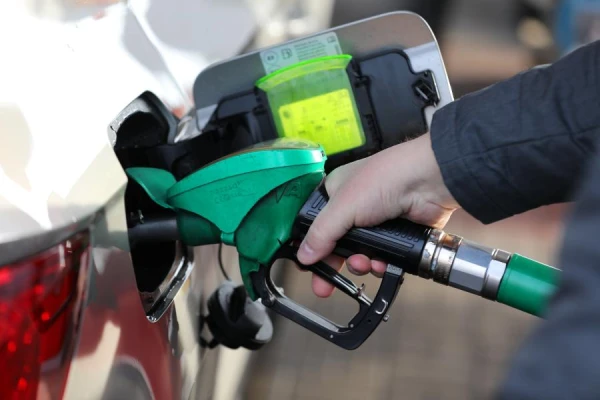
Latvian fuel traders present several arguments and do not rule out legal disputes over the idea of the Ministry of Economics to introduce a solidarity fee from retail fuel traders if their actual retail price exceeds the objectively calculated indicative retail price by more than 3%.
As stated in a letter from the Latvian Association of Fuel Traders addressed, among others, to Prime Minister Evika Silina, an additional tax on windfall profits in an emergency situation could be understood and supported, but the discussed decision is essentially not aimed at windfall profits.
The association believes that the proposal is effectively equivalent to regulating the selling price based on a synthetic and administratively constructed calculation of an allegedly "normal" margin. The letter claims that the artificially set "correct" margin established by the state cannot objectively reflect the real market situation and is unacceptable.
At the same time, the association points out that the proposed mechanism is not a tool against windfall profits, but a tool against a price that someone deems incorrect. The letter states that if the state starts to directly determine the price at which an entrepreneur can sell their goods without penalty, it will not be a tax policy in a market economy, but price regulation, which is incompatible with the principles of a free market and the rule of law.
Fuel traders believe that such an approach to price regulation is not only economically erroneous, bureaucratic, and cost-increasing but also dangerous for the rule of law. Before making further decisions, fuel traders urge an assessment of the constitutionality of this proposal, as they consider the introduction of such a selective fee fundamentally incompatible with the foundational principles of the Constitution.
The association calls on ministers to carefully assess the legal and economic risks of the proposal before making any decisions and to refrain from promoting this price regulation, thereby preserving a predictable investment environment and legal certainty in Latvia.
The association is ready for constructive dialogue with the government and responsible institutions to find solutions that protect consumer interests, maintain legal certainty, and do not undermine trust in the fundamental principles of a free market economy.
As stated by the head of the fuel company "Virši-A" Janis Viba, government intervention in the mechanism of the free market is a distorting market element with negative consequences for the industry in the long term.
Viba added that the fuel retail sector in Latvia has been characterized by low profitability for many years, which is a result of high competition among market players. According to him, the trader's markup on fuel products is about 7% of the final price for the consumer, and from this markup, the dealer has to cover expenses for wages, infrastructure, logistics, marketing, and other costs.
The chairman of the board of "Viada Baltija" Arunas Shatkus told the LETA agency that the company approached this proposal with caution and does not see that such a step would lead to a noticeable reduction in prices for the end consumer. At the same time, the company believes that the proposed mechanism could create a number of problems for the industry.
He stated that the methodology for determining the "objectively calculated indicative retail price" is an important issue, as if this methodology does not fully reflect market realities, there is a risk that traders will be unjustifiably subjected to additional costs.







Leave a comment