
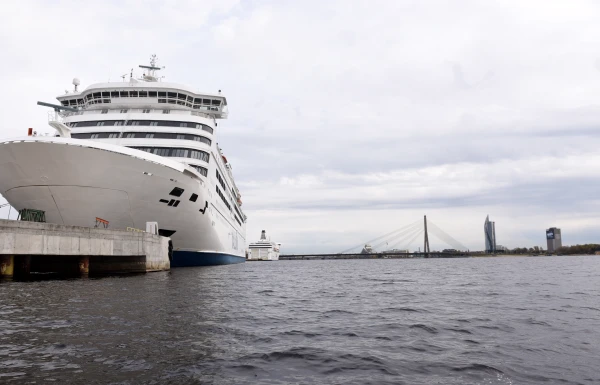
The total expenses for visiting the port of Riga for cruise ships will increase by 10–15% starting January 1 of next year, depending on the size of the ship, the management of the Riga Free Port told the LETA agency.
As explained by the port, due to the increase in the volume of waste that cruise ships discharge at the port, the costs of the Riga Free Port for their disposal are also rising.
In this regard, the sanitary fee rate for cruise ships has been revised. It is planned that starting from January 1, 2025, the sanitary fee will increase 2.5 times — from 3.2 cents per gross tonnage (GT) to 8 cents per GT.
Due to these changes, the total expenses of cruise ships for entering the port of Riga will increase by approximately 10–15%, the management noted.
According to an announcement from the Riga Free Port in the official publication Latvijas Vēstnesis, simultaneously, the sanitary fee rate for passenger and passenger-cargo ships will increase threefold — from 2.2 cents per GT to 6.8 cents per GT. The port explains that this rate will now correspond to the one already in effect for all other ships, except for cruise ships.
The message states that this year the port conducted an open competition to select a service provider for the reception and disposal of waste generated on ships. Under the concluded contract, payments to the provider are based on the actual volume of waste discharged and the established tariff.
Thus, the new system replaced the previous practice where the payment for the provider's services was determined as a percentage of the revenues from the sanitary fee.
The port clarified that the sanitary fee must be paid by all ships entering the port, regardless of the volume of waste discharged — even if the ship does not discharge any waste at all. The amount of the sanitary fee for a ship does not change with different entries into the port, despite possible differences in the volumes of waste discharged.
According to the current tariffs, cruise ships have still been paying a reduced sanitary fee compared to cargo ships — 3.2 cents and 6.8 cents per GT, respectively. This practice was possible because previously payments to the service provider did not depend on the actual volume of waste from a specific ship, but were calculated as a share of the total fee.
According to port representatives, the total revenues from the sanitary fee of all ships covered the costs of waste disposal: cases where a ship discharged a lot of waste were compensated by fees from those ships that discharged less waste or did not discharge any at all.
However, after the change in the calculation method for the reception and disposal of waste, the tariffs of service providers and the sanitary fee from cruise ships no longer correspond to each other: the actual costs of waste disposal from cruise ships significantly exceed the revenues from the sanitary fee from these ships. Therefore, it was necessary to revise the rate.
The port management also reported that changes in the tariffs for providing ship services — waste reception and polluted water, use of floating means, and supply of drinking water — are planned. These changes are related to rising costs and reflect the real situation in the market. Amendments will concern specific service providers, the management noted.
It was previously reported that in 2024, a total of 80,870 cruise ship passengers were serviced at the port of Riga — 1% less than in 2023, when 81,681 passengers were serviced.
The port of Riga is the largest in Latvia by the volume of cargo transshipment.















Leave a comment